Agency
View →
Ad automation
Custom apps
Data pipelines
AI agents

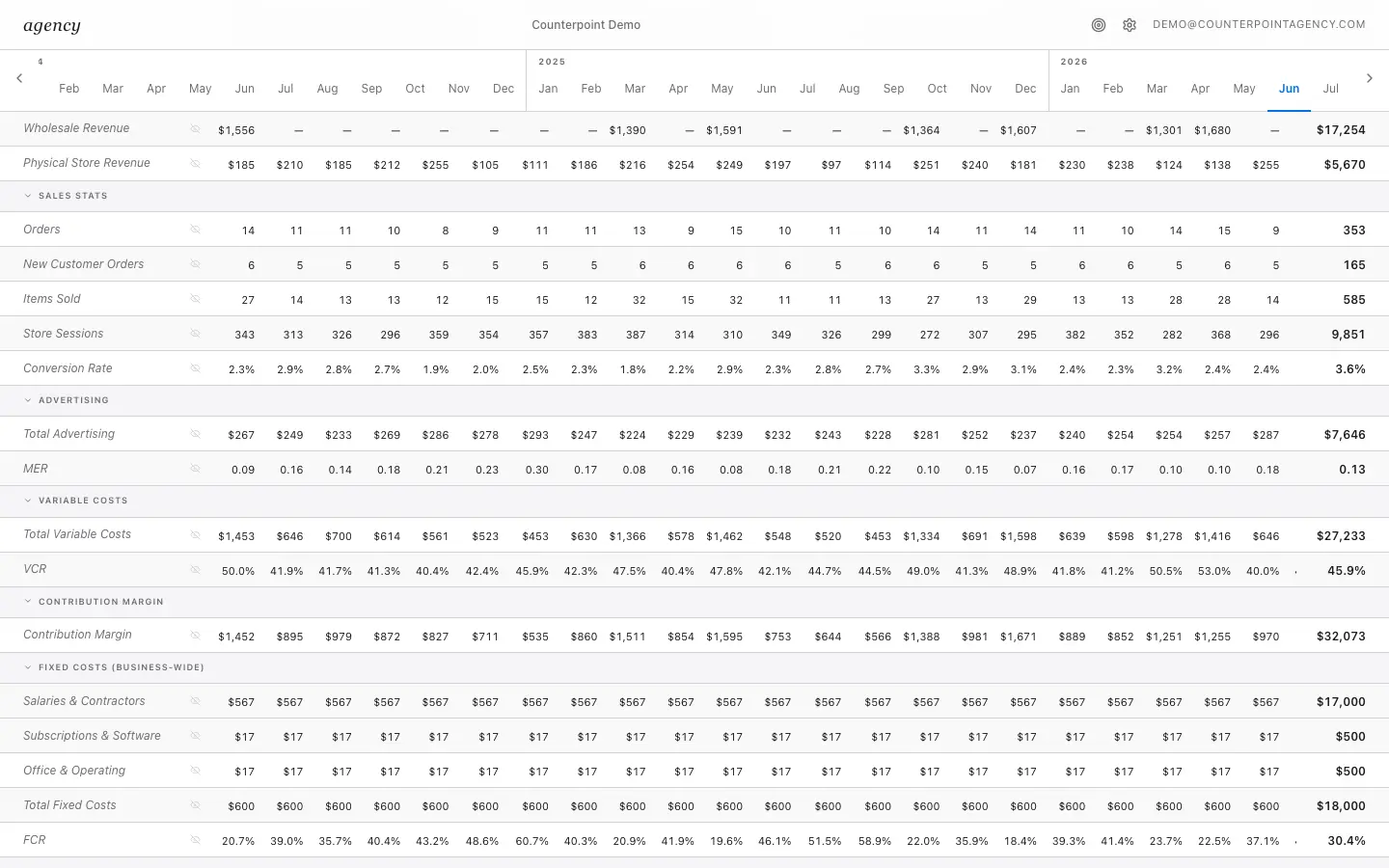
Five things the dashboard does, each one live in the demo above.
Every Monday, a written report on the business. It reads the week's numbers, tells the story behind them in plain language, and ends on the one move that matters most.
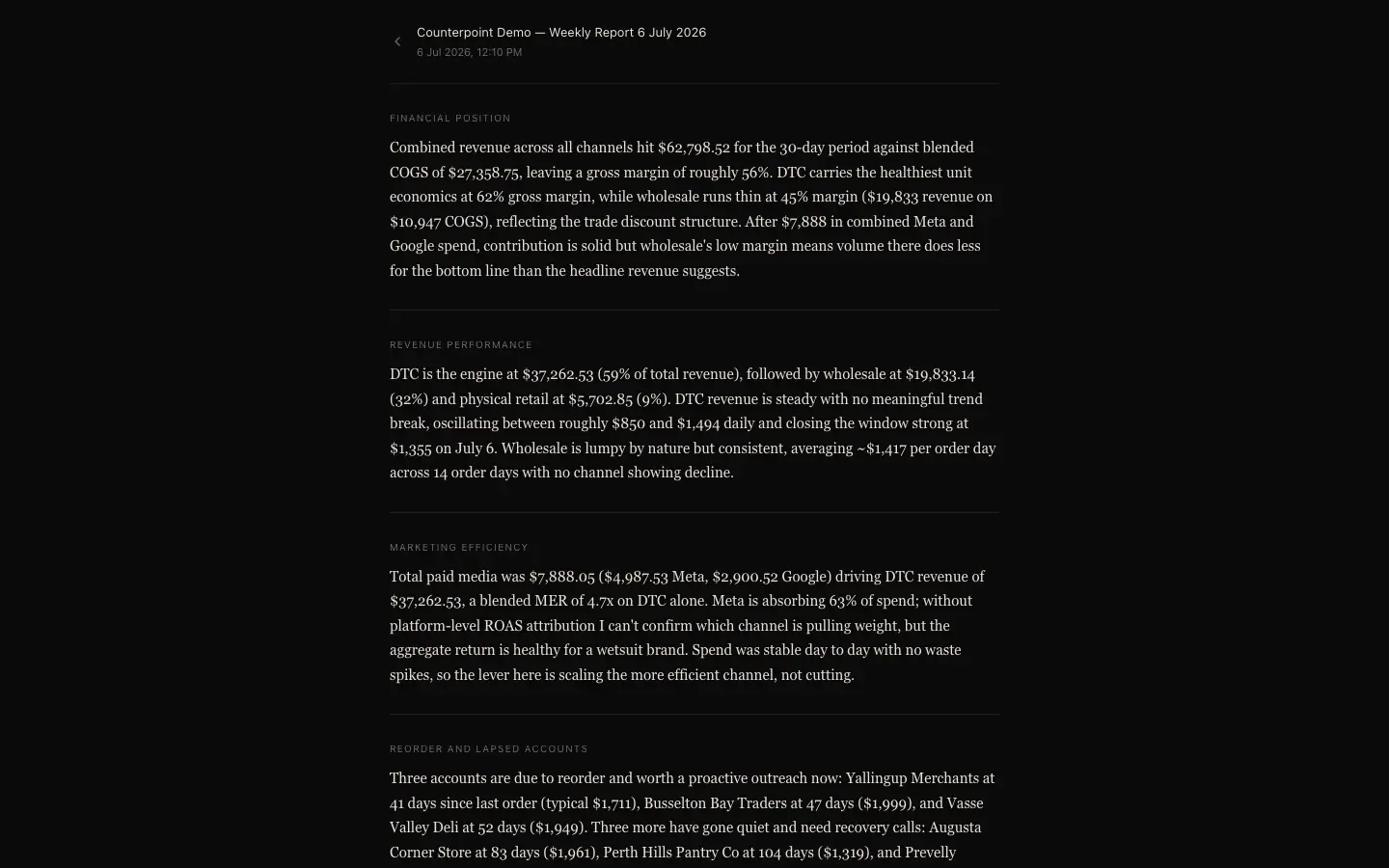
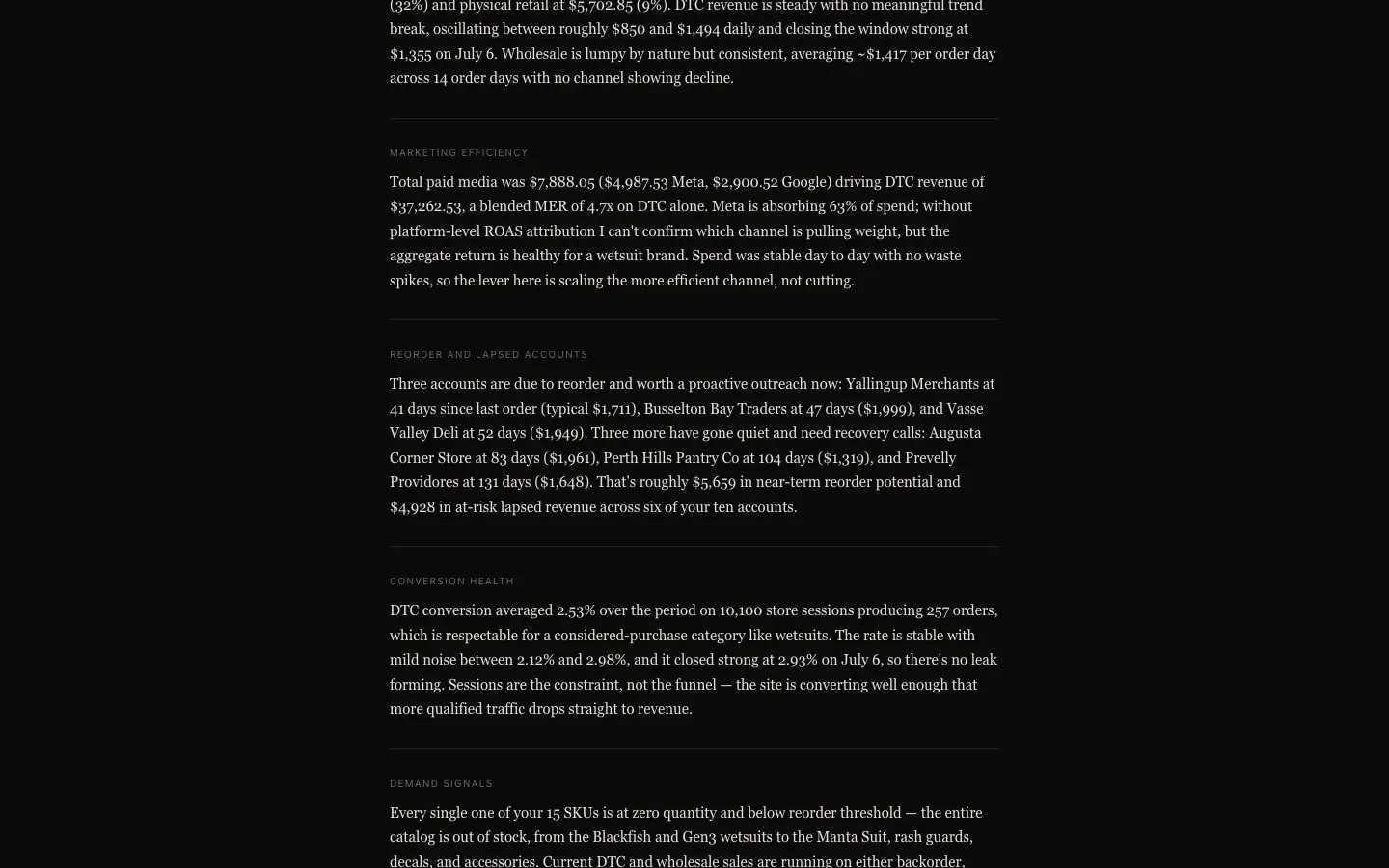
The briefing names the wholesale accounts due to reorder and the ones that have gone quiet, with how long since each last ordered, so a lapsing account is a line you read, not a gap you find later.
Set a revenue goal and watch the month pace against it, by channel, so you know whether you are ahead or behind while there is still time in the month to act on it.
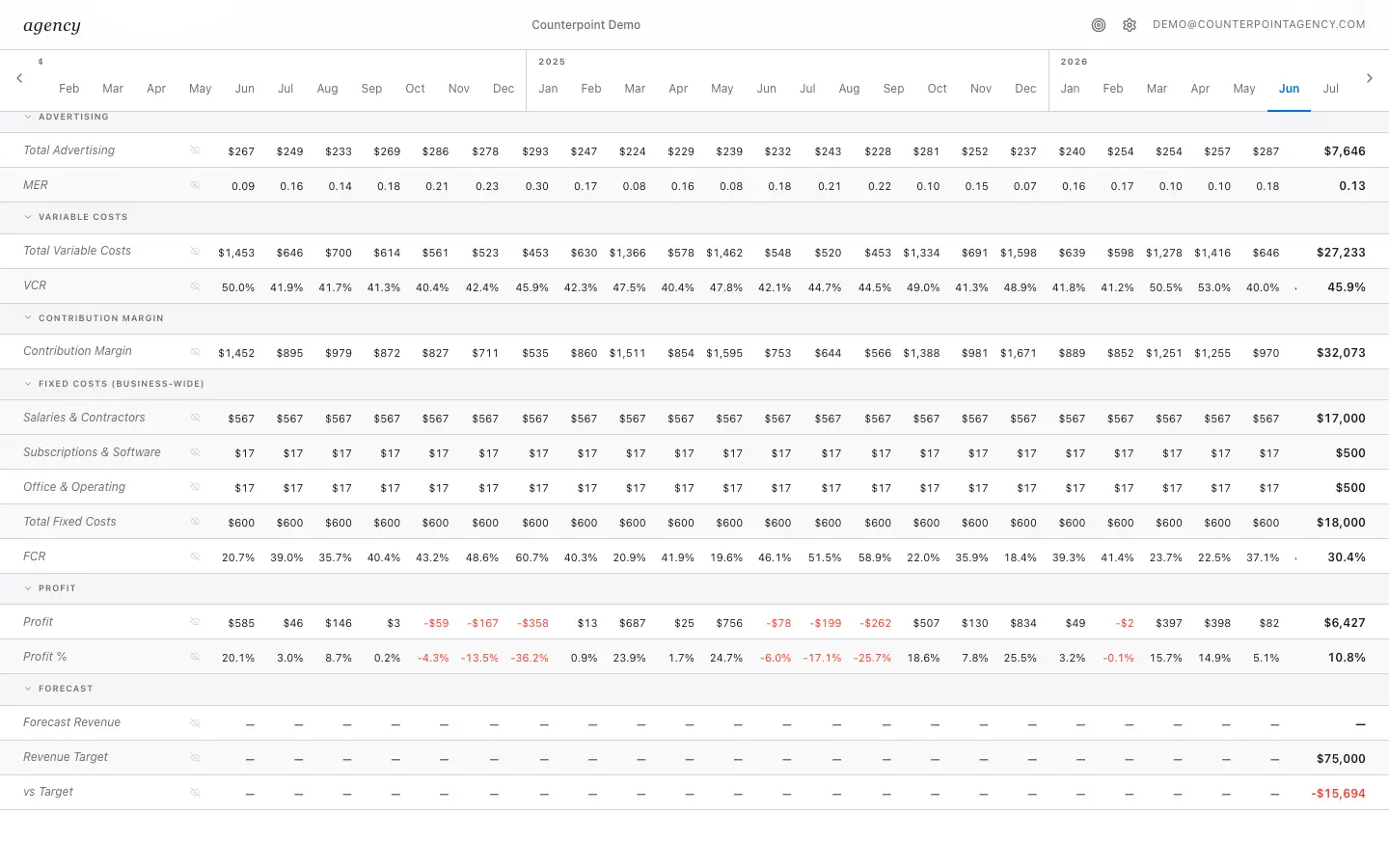
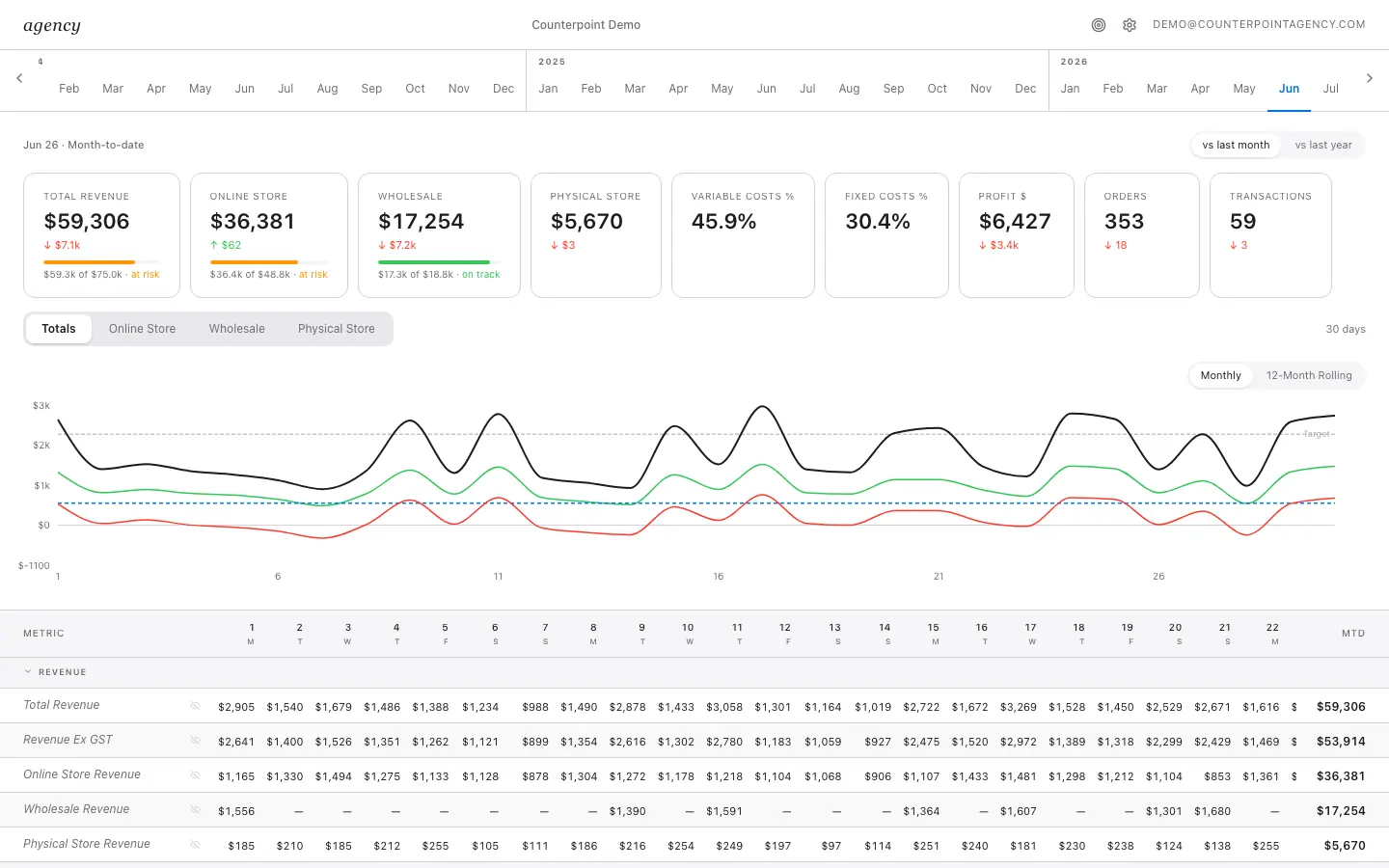
Online, physical and wholesale revenue side by side, day by day, with variable costs, margin and profit already worked out. One view instead of three spreadsheets.
Meta and Google spend sit beside the revenue they drove, so the return on your advertising is a number you can read at a glance, not a report you have to build.
The dashboard reads from the tools your business already runs on.
It pulls from the platforms you already use for sales, payments, books and advertising. For anything without a ready connector, we build the ingestion to match, so the numbers arrive on their own rather than being keyed in by hand.
Send your answers and we'll come back to you with a time.
The calendar did not load. Open it in a new tab.